What is textual preaching?
Textual preaching is notoriously difficult to define with precision. This is partly because of the name itself (shouldn’t all preaching be based on the biblical text?), and partly because it overlaps someone with other types of preaching (expository and topical).
But even if precision not possible, we can note some of the leading characteristics of textual preaching, and then talk about possible benefits and pitfalls.
Notable exponents of textual preaching include: John Wesley, Charles Simeon, C.H. Spurgeon, and J.C. Ryle.
Textual preaching is based on a short section of Scripture – often a single verse. The preacher extracts a single doctrinal or ethical idea from that text, and then develops that idea in line with the the teaching of Scripture as a whole, but not necessary in ways immediately suggested by the text itself.
John Broadus sees a gradation from textual to expository sermons. But, ‘if we simply take the topic and the heads which the passage affords and proceed to discuss them in our own way, that is not an expository sermon but a text-sermon.’ Whereas an expository sermon will explain and apply the text itself, the textual sermon will take its main idea(s) from the text and then look elsewhere for much of its development. Thus, a textual sermon is a sort of hybrid between an expository sermon and a topical sermon.
Bryan Chappell distinguishes between topical, textual and expository sermons thus:
- A topical sermon takes its topic from the passage and gets its organization from the nature of the subject rather than from the text’s distinctions.
- A textual sermon takes its topic and main points from ideas in the text, but the development of those main ideas comes from sources outside the immediate text.
- An expository sermon takes its topic, main points, and subpoints from the immediate text.
The flavour of textual preaching may be discerned from glancing at the titles of sermons preaching by the Methodist minister, Joseph Benson. These are published in ‘Sermons and Plans of Sermons‘ (1827). Here are the titles and texts of Benson’s sermons on Ephesians:
The Riches of Christ’s redeeming Acts, Ephesians iii. 8
The Riches of Christ’s saving Benefits, Ephesians iii. 8, 37
The Riches implied in the Methods by which Christ brings us to enjoy Salvation, Ephesians iii. 8, 43
Christians exhorted to Unity, Ephesians iv. 3, 50
To put off the old, and to put on the new Man, Ephesians iv. 22—24, 57
The Sin and Folly of grieving the Holy Spirit, Ephesians iv. 30, 62
Men asleep and dead in Sins, called to awake, Ephesians v. 14, 67
Believers enjoined to walk circumspectly, ” Ephesians v. 15, 16, 71
On redeeming Time, Ephesians v. 16, 75
Christians invited to partake of the Spirit freely, Ephesians v. 18, 79
It will be seen that, in many cases, the text is being used as a ‘springboard’ for teaching some important aspect of Christian belief or practice.
The value of textual preaching
(1) ‘Textual preaching provides an effective vehicle for preaching on some of the Bible’s grand statements.’ These include such ‘mountaintop’ texts as Jeremiah 33:3; Romans 8:28; or 1 John 1:9, or summary texts such as Prov. 15:1; Ezra 7:10; Mark 12:30; Romans 12:1–2; and Hebrews 12:1–2.
To take one example – the three infinitives of Ezra 7:10 (“to study … to practice … and to teach,” NASB) lend themselves to a sermon on the work of the Bible teacher or preacher.
Another example would be based on Rick Warren’s sermon on Mark 12:30. The sermon outline would look like this:
I. God wants you to love him thoughtfully (with your mind)
II. God wants you to love him passionately (with your heart and soul)
III. God wants you to love him practically (with your strength)
(2) ‘Textual preaching provides an effective vehicle for evangelistic preaching.’ On the one hand, it is clearly rooted in inspired Scripture. But, on the other hand, the preacher is free to cover ideas not immediately suggested by the text itself. Suitable texts would include John 3:16; John 14:6; Romans 4:5; Galatians 4:4–5; and Ephesians 2:8–9.
In Larry Moyer’s sermon on Romans 4:5 the main idea is: “You will stand perfect before God if you trust Jesus Christ and not your works.” A possible outline would be:
I. God is not asking how many good works you have done (“to the man who does not work”)
II. God is not asking how well you have behaved (“but trusts God who justifies the wicked”)
III. God is asking whom you are going to trust (“his faith is credited as righteousness”)
Guidlines for preparing and preaching textual sermons
(1) ‘Pay attention to the context.’ Preaching from a small unit runs the risk of isolating the text from the context. For example, Revelation 3:20, in context, is not addressed to unbelievers, but to believers. Therefore, it is not being entirely faithful to the text to preach it evangelistically.
(2) ‘Use the textual sermon form strategically and sparingly.’ Preaching only from ‘golden’ texts encourages hearers to read the Bible in that way – picking favourite verses while neglecting the overall flow of the Bible’s story.
(3) ‘Include synthesis as well as analysis.’ A good textual sermon will – like other types of sermon – have unity. The preacher must show, not just the individual parts, but how they relate each other and to the main point of the sermon.
(4) ‘Avoid trite, cleverly packaged outlines.’ Like the skeleton of the body, the sermon is important, but need not be obvious to the hearers. Today’s hearers rightly value authenticity over ‘cleverness’.
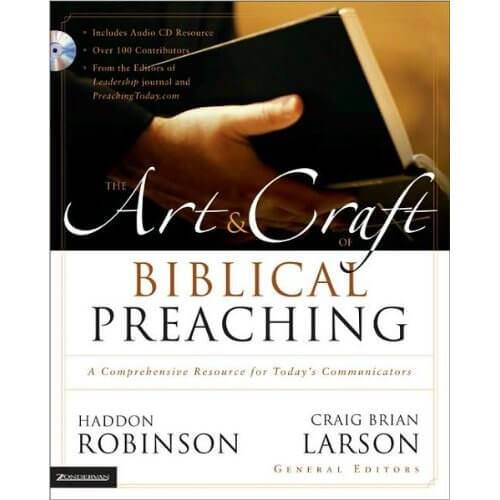
Based on (and quoting from) Steven D. Mathewson, in The Art and Craft of Biblical Preaching, chapter 111, ‘What makes textual preaching unique?’