Theology of Prayer 10 – Its place in moral government
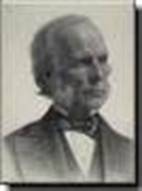
B.M. Palmer, Theology of Prayer, ch. 10
All the objections to the necessity of prayer are based on a misunderstanding of its nature and purpose. If prayer were intended to inform God of what he did not already know, or to stir up his reluctant generosity, or to persuade him to change his plans by appeals to his reason, then it would be an affront to God’s nature and a denial of his divine attributes. But the scriptural view of prayer is precisely the opposite of this, for it discloses God as a Father who looks with compassion on the needs of his children.
It is true that sin has ruptured this bond between the divine Father and his wayward children. But through grace we have opportunity for repentance and salvation. If it is true that all should pray to God as their Creator and Preserver, then Christians have greater reasons to pray, because they are God’s adopted children.
How is prayer connected with the blessings it secures? It is not that prayer works through its own efficient causality, but rather that God has established it as the prior condition upon which the predetermined blessing is based. In Eze 36:37, for example, the Lord has firmly resolved to bring his people back from exile; yet this purpose will work itself out through the prayers of Israel.
The classic passage is Rom 8:26f. Here we learn that God purposes to bestow good. The Holy Spirit produces in the human heart a corresponding desire, which is expressed in prayer.
Some suppose that the only value in prayer is the reflex benefit on the person praying. After all, if God has already determined to bestow a particular blessing, then what can prayer achieve other than preparing the heart to receive that blessing? In this view, prayer simply brings us into a receptive frame of heart. But if the opposite view of prayer as counselling God is insulting, then the view which regards it as affecting only the suppliant is inadequate. Those who engage sincerely and earnestly in prayer cannot evade the conviction that it really does in some way affect the outcome. Prayer is a real pleading with God. If we deny this aspect of prayer, then it ceases to be prayer at all, and must be regarded simply as pious meditation.
What, then, is the office of prayer? Truly, in the administration of moral government over creatures who are both intelligent and responsible, it is necessary that all their faculties should be consciously exercised, and that their will should be co-ordinated with the will of their Creator.
It would be absurd to suppose that we are endowed by God with intelligence, affections, conscience and will, and for these lofty powers to lie dormant in the soul, their exercise restricted to the lower sphere of our relations with one another.
If it is objected that prayer can have no place within a system of rigid law, then the fallacy is to assume that everything operates within a closed mechanical system of cause and effect. But there is an immaterial, as well as a material, reality, and their are laws of the soul as well as laws of nature. And it is a fundamental law of the spiritual kingdom that both the will of the creature and the will of the Creator must be drawn forth, blending as the factors involved in the production of every event. Destroy either of the two, and history becomes a blank. To be sure, the union of the human and divine wills is a deep mystery. But the great truth stands, that God rules with and through the conscience, thought and will of his sentient creatures.
Prayer, then, is ordained as the means by which the human will may be placed alongside the divine will, and become united with it. It is an undeniable factor in the final result, and man’s moral nature is thus an active player in God’s governance in providence and in history.
This account of prayer does not explain why God sometimes bestows the greatest blessings on those who pray least. It only describes the method adopted by God in his relationship with his children. The actual outworking belongs to his own inscrutable sovereignty. God may, for example, bless the wicked in order to discipline his own people. Then again, even the irreligious adopt an attitude of prayer as when, for example, the farmer prepares the soil and sows the grain, those very acts forming an unspoken and unacknowledged prayer of trust in him who promised that ‘seed-time and harvest shall not cease while the earth remains.’ And, finally, such temporal prosperity may in fact be seen as a bitter curse. ‘Alas! how many in eternity will bewail that fortune on earth by which their hearts were seduced from the service of God!’