Theology of Prayer 4 – Prayer a universal duty
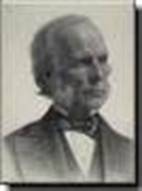
B.M Palmer, Theology of Prayer, ch 4
That prayer is a universal duty is seen in the following:-
1. The express command of God
- Mt 6:6 – “When you pray…”
- Mt 7:7 – “Ask…seek…knock.”
- Lk 18:1 – ‘…to show them that they should always pray and not give up.’
- Eph 6:18 – ‘pray in the Spirit on all occasions with all kinds of prayers and requests.’
- Phil 4:6 – ‘…in everything, by prayer and petition, with thanksgiving, present your requests to God.’
- 1 Tim 2:8 – ‘I want men everywhere to lift up holy hands in prayer…’
This obligation is not cancelled, if we fail to understand the philosophy of prayer. It is not for us to question it, when it is ‘a simple act that he has ordained prayer as the privilege and duty of all his intelligent subjects.’
It is not essential that we can solve ‘the problems which lie on the boundary line between the Divine and human agencies, and at which they so sweetly, yet mysteriously blend. To those who defer to the authority of Holy Scripture, no other foundation of any duty is required than a “thus saith the Lord.” Those who do not recognize the dogmatic authority of the inspired word must be met with other arguments.’
2. The nature of prayer itself
The proper recognition of man’s dependence upon God finds its expression in th posture of prayer. The recognition that man is a moral creature, guilty before God, expresses itself in the language of repentence. Still further, prayer is binding upon man as worshiper.
3. Prayer an instinct of man’s religious nature
This instinct is natural except where it is totally repressed and overcome by sinfulness. ‘A soul cast in the image and after the likeness of God, may be expected to assert its spiritual nature by striving to commune with its divine author. Nothing but sin drags these aspirations into the dust, and extinguishes the prayer in which they seek to rise.’
4. Prayer brings the moral faculties of the soul to their fullest development
‘Man…has yearnings which this earth can never satisfy, and which point directly to God and the great hereafter as the objects of his search.’
Here is a bridge spanning a broad river with a single arch. One end rests upon its abutment this side the stream, the other upon its abutment at the further bank; and the very law of gravity which threatened the structure with ruin serves only to steady it and to hold it firmly in its double socket. Does this emblem teach how man, with his aspirations for the Infinite and Eternal, shall bridge the chasm which lies between? It must be with a single span resting upon its abutments on either side of the gulf, in the nature of man and of his Maker alike.
Man’s quest for knowledge is answered by the fulness of truth which has its source in the Godhead. Man’s affections reach their fullest expansion and enjoyment in the ‘blessed God’. So with the imagination and taste: man finds God to be the supreme object of beauty. And also with the will. And prayer, of course, is the medium of intercourse between the moral faculties of man and the sublime fulness of God.
5. Prayer the means by which human agency blends intelligently with the divine
Man, if he be a responsible being at all, must move upon his own plane, working, contriving, predestining (if you will) up to the bent of his knowledge and power. God, too, if he be acknowledged in the supremacy of his being, must move upon his plane, infinite in wisdom and power,” working all things after the counsel of his will.” Where these plans and purposes intersect, or how they fold one upon the other, we may not be able to distinguish.
All that we do know is, that the intersection of these threads makes the web of history. We may not be able to measure the angle at which these planes touch each other, nor to see how the one can move across the other without contradiction or even friction. We only know that in the loom the shuttle must move between and across the threads, and that warp and woof cannot run in parallel lines. It is the crossing at right angles, with a good pressure of the threads against each other, that gives the firm texture of the web.
If man is to be a willing co-worker with God in the execution of his plans, then must he pray. He cannot rise to an equal share of the divine sovereignty, so as to sit down at the council board of the Godhead ; he can only pray to be a single thread in the mighty tapestry which has been woven in the divine loom from all eternity.