‘A better story’ – 2
Behind the sexual revolution is an ideology of radical individualism. This ideology has been driven, in part, by the philosophy of Nietzsche (‘there are no facts, only interpretations’) and Marx (‘our identity is determined by our social context’). Berger added the idea of ‘plausibility structures’ – by means of which ideas gain leverage who endorses them, and how, rather than by the application of evidence and reason.
But:-
‘We mustn’t abandon reason simply because we have learned how easily she can be fooled…The biblical concept of human beings created in the image of God means that we expect a meaningful correspondence between the reality that God has put us in, and our abilities to make sense of it through the gift of reason.’
A new way of flourishing?
If in the 1960s self-expression was little more than an act of defiance, in subsequent decades it has been transformed into a moral quest: a quest for authenticity and becoming your true self.
Actually, this quest for finding the truth within yourself was another iteration of gnosticism, with its separation of the physical and the spiritual, its distrust of the former, its quest to escape from the level of the mundane to a higher spiritual level, and its claim to secret knowledge (most importantly, how to become your true, inner, self).
Emerging from this gnostic worldview is the idea that ‘natural’ distinctions (such as those between male and female), and the notion of there being a natural order to sexual relations, are illusory at best.
Christians would say that gnosticism, in both its ancient and modern forms, entails a rebellion against God and the reality he has created. In the area of sexuality, the quest for liberation has entailed debasement. Given the subservience of the ‘physical’ to the ‘spiritual’, the former can be trampled upon in a defiant attempt to achieve transcendence.
The lifestyles engendered by the new gnosticism are write large in film, literature and newspapers. In the reality of everyday life, however, things are somewhat more tempered:-
‘Think about the perfectly happy cohabiting couple with a beautiful little girl who run the charity you are proud to support. Pictures of bacchanalian nights of sex on the kitchen table somehow don’t ring true. Then there’s the very nice, but rather boring, gay couple living next door. Their lives seem to revolve around cups of tea and walking the dog, rather than raunchy nights of ecstatic hedonism.’
But the impact of gnosticism is no less far-reaching for all that:-
‘In a steady, relentless drip it has achieved the erosion and dismantling of marriage as an institution given by God (‘Hey, why not just live together first? What’s so special about marriage?’); the deconstruction of the family (‘comes in all shapes and sizes’); and the cultural dominance of the idea that ‘just being yourself’ is the road to success (‘I realized that I needed to find myself’). And those who oppose these ideas are seen as bigoted throwbacks to a bygone era.’
A war against reality
If reality is within us, then this entails a rejection of external ‘realities’. This includes the physical domain in general, and the human body. It has now become possible to adopt an image of the self that is entirely add odds with the image presented by one’s body. We are free to define ourselves without reference to our bodies. I can be a six-year-old girl in the body of a 50-year-old male. I can define myself as ‘black’, even though my skin is white. I can claim to be a cat, having been born ‘in the wrong species’.
We must be careful to distinguish between gender ideology and gender dysphoria. The reality of the latter in a small number of cases should not used to justify a whole new ideology about what gender is:-
‘We can be fully sympathetic to the complicated (and mysterious) experience of those who struggle with gender dysphoria, without buying into the new gender ideology that has been built around it.’
The perception of gender has been separated off from biological givens (chromosomes, hormones, and physical characteristics). So, when there is a conflict between the two, ‘the modern approach is to say that it is our picture of reality that needs fixing rather than anything in ourselves.’
In Western culture, it has usually been assumed that there exists an objective reality ‘out there’. A world-view is, accordingly, ‘right’ or ‘wrong’ depending on the extent to which it conforms to that reality. In today’s neo-gnostic world, however, any disconnect between the individual and his view of reality is dealt with by changing one’s perception of reality, rather than by changing the individual.
In this whole area, most of the thinking has been done by secularists and liberal Christians. Evangelicals have been caught napping by the speed of scale of the culture change. We have much hard thinking to do if we are to have a stake in the discussion.
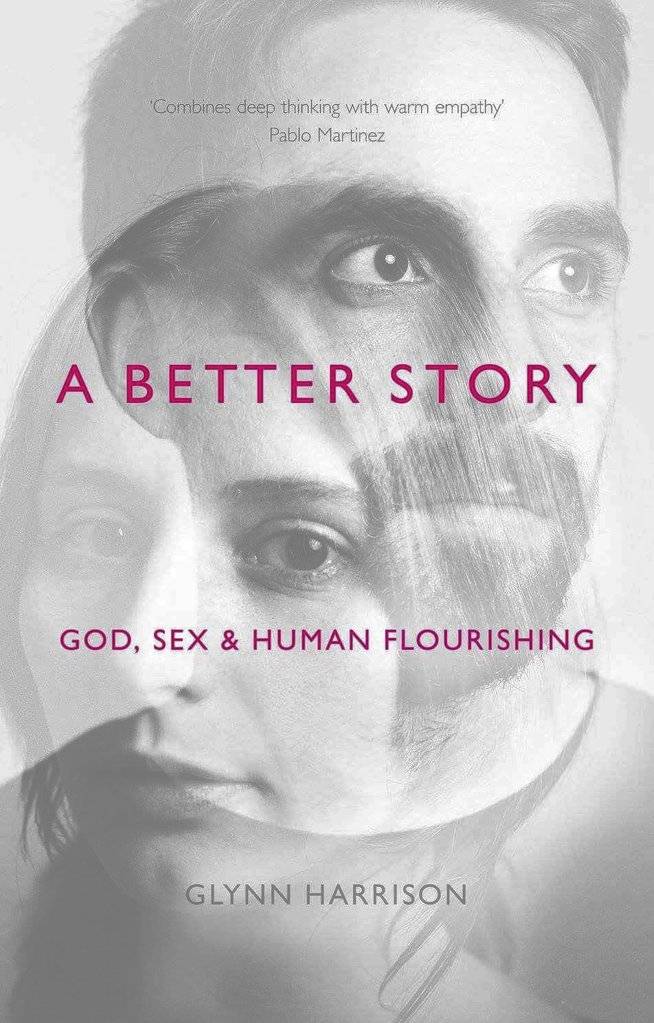
Based on (and quoting from) Harrison, Glynn. A Better Story: God, Sex And Human Flourishing. IVP. Chapter 2.