‘A better story’ – 4
Everyone loves a good story. Not surprising, then, that storytelling has been at the heart of the sexual revolution. Storytelling seems to fit the shape of the human mind, and to reach places that other forms of communication cannot reach.
The entertainment industry understands this, and has exercised its talents in taking complicated ideas and melding them into powerful, attention-grabbing, and persuasive narratives:-
‘And so with riveting narratives about hypocritical politicians and fossilized bishops, pitted against outsiders and the oppressed, brave men and women finding the courage to be ‘who they really are’, they appealed to the moral instincts of ordinary, decent people.’
Researchers such as Paul J. Zac have discovered a link between ‘good stories’ and a release of the hormone oxytocin. The result is that we experience a greater level of empathy, compassion, and generosity.
But what makes a ‘good story’? Over 60 years ago, Joseph Campbell found that running through the great myths of the world there is ‘a universal motif of struggle, adventure and heroic transformation.’ In other words, says Harrison:-
‘Great stories with the power to grab our attention employ a dramatic arc structure that goes something like this: a character struggles against overwhelming odds and seems on the edge of defeat; suddenly she discovers hitherto unknown powers or abilities; these new powers (or insights) enable her to triumph dramatically, and decisively; everybody lives happily ever after.’
Neuroscientist Jeffrey Zacks has found that immesion in the sensory world of the movie arouses not only our emotions but also our imitative instincts. As you watch the hero clinging to a ledge, your own heart rate increases, your pupils dilate, and your muscles tense. Filmmakers know to increase the bass volume and zoom in on the actors’ expressions in order to magnify this response.
Philosopher Charles Taylor has argued that our memories about ourselves and the world we live in does not work by storing lists of facts, but by accumulating, at a pre-conscious level, sets of stories, myths and legends. Based on Taylor’s work, James K.A. Smith has illustrated how this works in relation to today’s dominant narrative of secular progress. Smith says:-
‘There is a dramatic tension here, a sense of plot, and cast of characters with heroes (e.g., Galileo) and villains (e.g., [the ‘medieval Catholic Church’]). So if you’re going to counter [these] stories, it’s not enough to offer rival evidence and data; you need to tell a different story.’
There is no point, says Harrison, in attempting to refute such a story with facts: you must tell another, better, more truthful story.
Beside the stories promulgated by the entertainment industry, there are also the ‘real-life, heroic narratives of ordinary people battling for their freedom.’ For example,
‘When the full horror of AIDS broke in the 1980s, there began to emerge incredibly moving stories of compassion and selfless care. Even as society recoiled, and some heralded a coming ‘gay plague’, ordinary men (they were mostly men) nursed their partners in circumstances that some of those calling down judgment upon them would simply have refused to contemplate: they bathed their wounds, emptied their bedpans and fed their wasting bodies until finally they laid them to rest. Or rather, until they were forced to watch from a distance as their families laid them to rest.’
Harrison tells the story of how Tim Montgomerie, a columnist with the The Times, came to change his own views about gay marriage. During a time of prayer ministry at a church service, ‘he encountered a depth of love and grief in a man who had lost his gay partner, for which his orthodox beliefs had no convincing response’:-
‘He had stood at the back of his soul mate’s funeral as a distant mourner. He told me that he’d never felt lonelier. My eyes were now full of tears too. I cannot believe that Jesus Christ wouldn’t have embraced and consoled that man . . .’
Other Christians may dissent from the reasoning here, but we are compelled to recognise the emotional power of the story. We must be prepared not only to engage in the ideas presented, but also to show that we possess a better story. And this story must be embodied in lives of sacrifice, beauty, and persuasive power.
As Harrison comments:-
‘Many of the key players in the sexual revolution understood the need for this kind of cultural embodiment. They showed that they were willing to swim against the flow. They braved the stigma of difference, marched the streets, formed pressure groups and conjured up the determination to show the world what love could look like. And if there’s to be a Christian sexual revolution capable of turning the tide, it will need to do the same.’
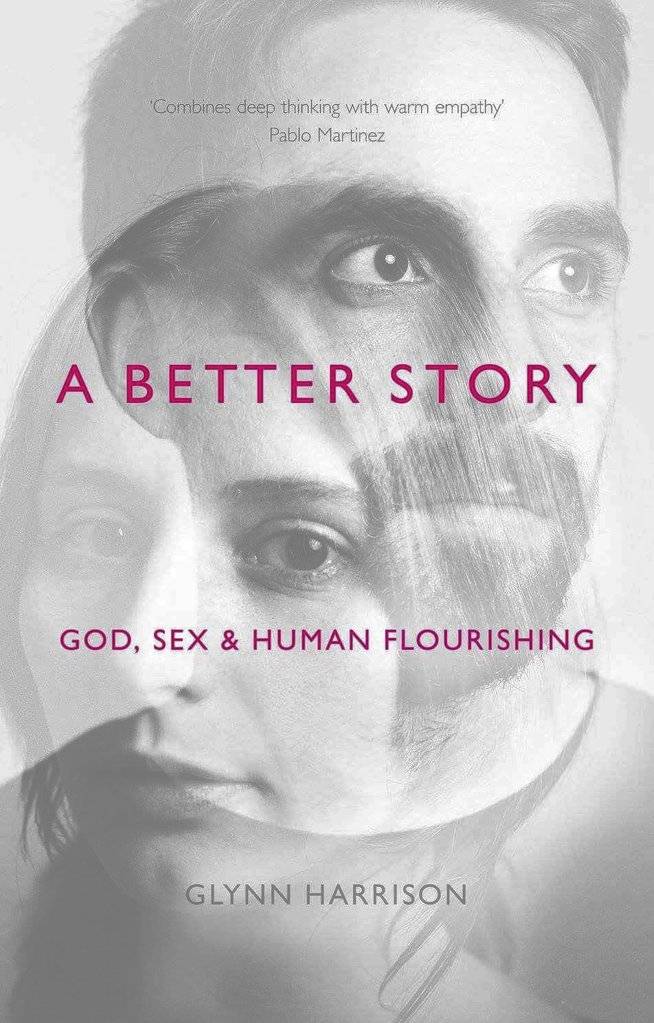
Harrison, Glynn. A Better Story: God, Sex And Human Flourishing. IVP. Chapter 4.